


Headaches are among the most common symptoms we experience in our daily lives. They may occur after a long day, lack of sleep, stress, or skipping a meal.
However, when headaches become frequent, change in nature, or start affecting your daily life, it is important not to simply assume that they are temporary.
Are All Headaches the Same?
Not at all.
There are different types of headaches, and their symptoms can vary from one person to another.
The pain may feel like pressure or heaviness around the head, while in other cases it may feel throbbing. Some headaches may also be accompanied by symptoms such as sensitivity to light or sound, or nausea.
This is why describing your headache accurately can be very helpful when speaking with your doctor.
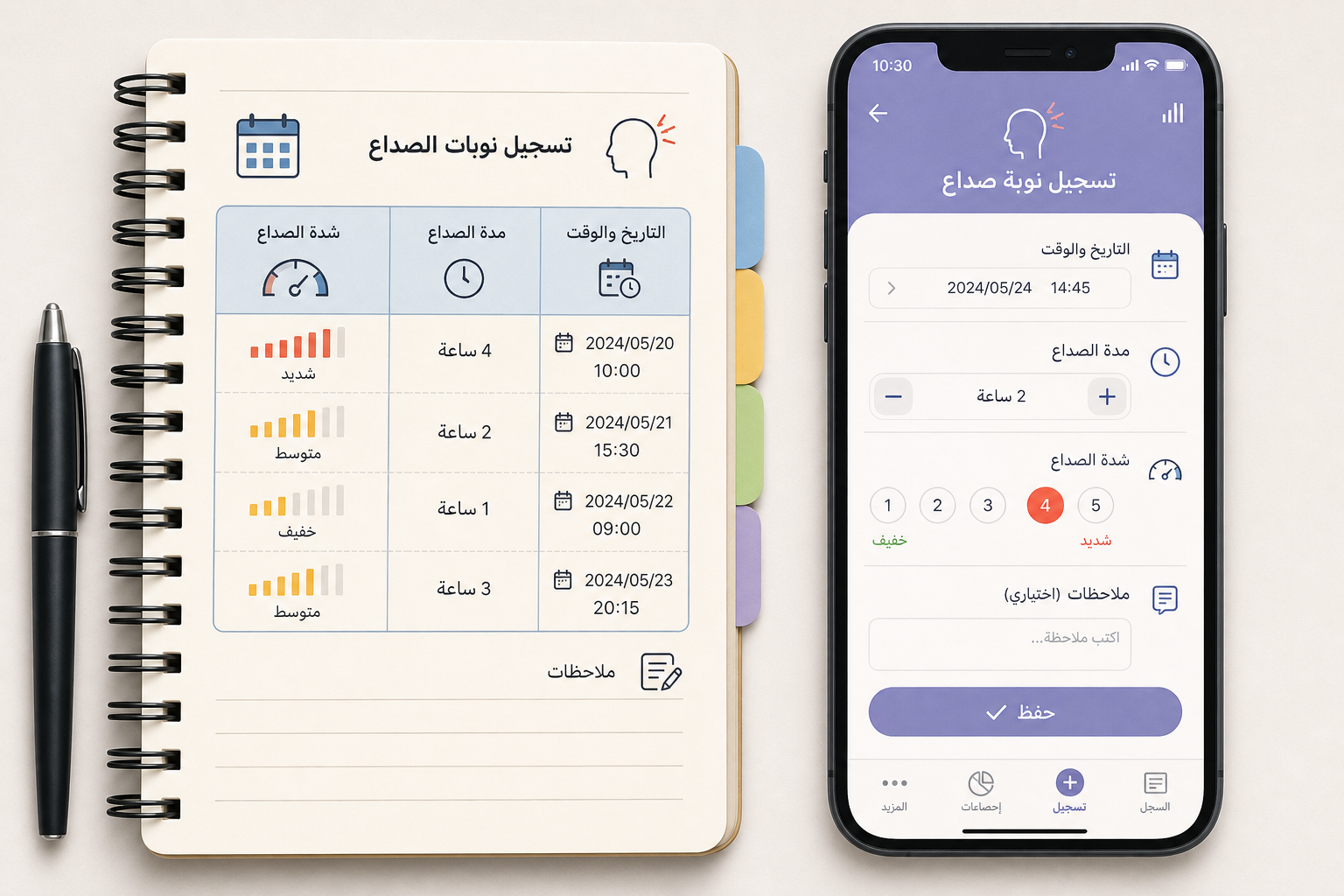
Try to keep track of:
When the headache starts.
How long it lasts.
How often it occurs.
Where you feel the pain.
What makes it better or worse.
Whether it is accompanied by other symptoms.
These simple details can help your doctor understand your condition more clearly.

What Can Trigger or Worsen Headaches?
Several factors may contribute to headaches or make them worse in some people, including:
Lack of sleep or irregular sleep patterns.
Stress and physical or mental exhaustion.
Skipping meals for long periods.
Not drinking enough fluids.
Frequent use of certain pain medications.
Certain environmental factors or daily habits.
However, the presence of one of these factors does not necessarily mean that it is the only cause of the headache.
A proper medical assessment is often needed to understand the underlying cause.

When Should You See a Doctor?
If your headaches occur frequently, become more severe or more frequent than usual, or begin to interfere with your work, sleep, or daily activities, it is a good idea to seek medical evaluation.
You should also take certain symptoms seriously, particularly a sudden and extremely severe headache or a headache accompanied by new neurological symptoms such as:
Changes in consciousness.
Weakness or numbness affecting one side of the body.
Difficulty speaking.
Significant changes in vision.
In these situations, seek appropriate medical attention promptly.
Do You Need Imaging for a Headache?
Not every headache requires medical imaging.
This is an important point.
In many cases, your doctor can initially assess the type and possible cause of a headache by taking a detailed medical history and performing a clinical examination.
Imaging or other diagnostic tests may be recommended in certain situations when your doctor believes that additional information is necessary.
For this reason, I do not recommend undergoing imaging tests simply because you have a headache.
The goal is not to perform as many tests as possible, but to choose the right test when there is a medical reason for it.
You can also visit our [Radiology Services] page to learn more about the available diagnostic imaging services.
What About Painkillers?
Painkillers may help relieve certain types of headaches, but relying on them frequently without understanding the underlying cause is not always the best approach.
If you find yourself needing pain medication regularly to manage your headaches, it is worth discussing this with your doctor.
It can also be helpful to keep a record of how often your headaches occur and which medications you take. This information may help your doctor during the evaluation.
What Can You Do When a Headache Starts?
There is no single approach that works for every type of headache. However, some healthy daily habits may help reduce certain common triggers.
These include maintaining a regular sleep schedule, eating meals regularly, staying adequately hydrated, and managing stress whenever possible.
It can also be useful to identify your personal headache pattern.
If you notice that your headaches tend to occur after a particular activity, habit, or situation, mention it to your doctor rather than ignoring it.
My Advice to Patients
From my experience caring for patients, one of the most important things is finding the right balance.
We should not ignore persistent symptoms, but at the same time, we should not become unnecessarily worried about every occasional headache.
A headache is a symptom, not a diagnosis.
A headache that occurs occasionally and resolves on its own may not be a cause for concern. However, headaches that become frequent, severe, or different from what you normally experience deserve proper medical attention.
Try not to rely on internet searches as your primary method of diagnosis.
If headaches are repeatedly affecting you, speak with your doctor and describe the nature, frequency, duration, and associated symptoms as accurately as possible.
Because good medical care often begins with listening carefully to the patient.
Disclaimer: This article is intended for general health education and does not replace professional medical advice, diagnosis, or examination. If you experience sudden, severe, or concerning symptoms, seek appropriate medical care promptly.